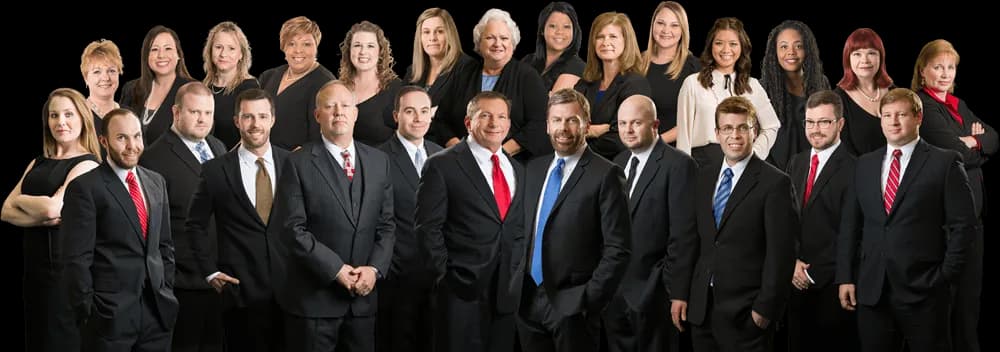
30 Years Serving Clients
Brock & Stout was founded in 1996. For three decades, our firm has helped people and families through difficult legal and financial circumstances.
Social Security Disability Insurance for workers who can no longer sustain substantial work.
If a medical condition has forced you out of work, your work history may qualify you for Social Security Disability Insurance. Brock & Stout can help you understand the rules and handle the claim from application through appeal.
Nationwide representation · 30 years serving clients · 12,000+ disability claims approved
Social Security Disability Insurance, usually called SSDI, is a federal benefit for workers who have earned enough Social Security work credits and meet Social Security’s definition of disability.
If approved, SSDI generally provides a monthly benefit based on your covered earnings record before disability—not on your current household income or the severity of your diagnosis. Certain eligible family members may also qualify for benefits on your earnings record. SSA explains those rules on its family benefits (opens in a new tab) page.
SSDI is different from Supplemental Security Income (SSI). SSDI is based primarily on your insured status and work history. SSI is a needs-based program with income and resource limits. Some people can qualify for both programs at the same time.
A different Title II benefit—disabled adult child benefits—is paid on a parent’s Social Security record when disability began before age 22. That claim does not use the adult child’s own work credits. See disabled adult child benefits.
For a broader look at our Social Security Disability practice, visit our Social Security Disability attorneys page. We can represent SSDI claimants throughout the United States; see how nationwide disability representation works.
Free consultation · No attorney fees or case costs if the claim is denied
An SSDI attorney should do more than file forms. You should have a team that understands insured status, medical evidence, and how Social Security decides whether you can still work.
30
Years Serving Clients
12,000+
Disability Claims Approved
20
Attorneys
Nationwide
Disability Representation
12,000+ disability claims approved is a historical firmwide total. Past results do not guarantee a similar outcome.
Brock & Stout was founded in 1996. For three decades, our firm has helped people and families through difficult legal and financial circumstances.
Our firm has helped more than 12,000 disability claims reach approval. Every case is different, and past results cannot guarantee a future outcome, but that experience gives our team extensive familiarity with the disability process.
Brock & Stout has 20 attorneys and more than 100 staff across the firm. Disability clients benefit from the resources of an established law firm while still having a team responsible for helping move their individual claim forward.
Social Security Disability is a federal program, so our disability attorneys can represent claimants throughout the United States. You do not need to live near one of our offices to work with us. Much of the process can be handled by phone, video and secure document exchange.
It costs nothing to talk with us about a potential SSDI claim.
SSDI is an insurance program tied to your work history. When you work in jobs covered by Social Security, part of your earnings goes toward Social Security and you earn work credits. To qualify for SSDI, you generally need enough total credits and enough recent work credits based on your age when your disability began.
For many workers age 31 or older, SSA generally looks for at least 20 credits earned during the 10 years before disability began. Younger workers may qualify with fewer credits. Special rules can apply in some situations, including statutory blindness.
Because the rule depends on your age and work history, you should not assume you are ineligible simply because you have not worked for ten full years. SSA explains how credits work on its disability qualification page (opens in a new tab). You can also review your earnings record in your my Social Security (opens in a new tab) account.
Having a serious medical condition does not automatically qualify someone for SSDI. Social Security looks at how your physical and mental conditions affect your ability to work on a sustained basis.
In general, SSA must find that a medically determinable condition keeps you from engaging in substantial gainful work and has lasted, or is expected to last, at least 12 continuous months or result in death.
SSA may consider whether you can still perform relevant work you have done in the past and, if not, whether you could adjust to other work considering factors such as your functional limitations, age, education and work experience. Current past-relevant-work rules generally look at qualifying work from the last five years.
That is one reason the medical diagnosis alone is not enough. The evidence also needs to show what your condition keeps you from doing.
You do not have to wait for a denial to ask for help. We work with clients at different stages of the SSDI process.
A medical condition has forced you to stop working or substantially reduced your ability to maintain regular work, and you are unsure whether you meet SSA's rules.
Tell Us About Your Work Situation — request a free disability case evaluation
You want help understanding your work history, medical evidence and what information Social Security will ask for.
Talk About an SSDI Application — request a free disability case evaluation
A denial is not necessarily the end of the claim. We can review the decision and help determine the appropriate next step in the appeal process.
My SSDI Claim Was Denied — request a free disability case evaluation
We can review the record, prepare you for what to expect and represent you before the administrative law judge.
Help With an SSDI Hearing — request a free disability case evaluation
Hiring an SSDI attorney is not about having someone simply submit forms. Our job is to help develop and present a claim that accurately explains both your medical conditions and how those conditions limit your ability to work.
Depending on the stage of the claim, our team may:
The details matter in an SSDI claim. We help make sure Social Security sees more than a diagnosis—it sees how the medical evidence, work history and functional limitations fit together.
You can apply for Social Security Disability benefits through SSA. Many people apply online, and SSA also provides options to apply by phone or with assistance from Social Security. See SSA’s apply for disability (opens in a new tab) page.
You are not required to have an attorney to file an SSDI application. An attorney can help you understand the questions SSA is asking, identify issues with the medical or work evidence, and assist if the claim is denied.
Many disability applications are denied at the initial level. A denial does not necessarily mean you cannot qualify for benefits, and it is important to understand the reason SSA denied the claim before deciding what to do next. For reconsideration, hearings and later review, see our disability claim process page.
If you have not applied yet, we can review your situation and help you understand what information may be important to the claim.
Get Help Before You Apply — request a free SSDI case evaluation
If your application is pending or has been denied, we can review where the claim stands and explain the next step.
Get Help With an Existing Claim — request a free SSDI case evaluation
| Topic | SSDI | SSI |
|---|---|---|
| Based on work history? | Yes. Generally requires enough Social Security work credits. | No. Not based on the claimant’s own work credits. |
| Income and resource limits? | Not a needs-based program, although work activity can affect eligibility. | Yes. SSI has income and resource limits. |
| Adult disability standard? | Generally the same sequential evaluation for adults. | Generally the same for adults applying based on disability. SSI can also apply based on blindness or age 65 or older, subject to other rules. |
| Monthly amount | Based primarily on the covered earnings record. | Based on federal and state SSI payment rules and countable income. |
| Health coverage | Medicare after applicable entitlement and waiting rules. | Often Medicaid, depending on applicable rules and the state. |
Some people may potentially qualify for both SSDI and SSI. For a closer look at the nonmedical questions that often come up, use our SSDI vs SSI guide.
SSDI does not pay everyone the same amount. Your monthly benefit is generally based on your Social Security-covered earnings record before disability. It is not calculated based on how severe your medical condition is.
The easiest way to see SSA’s current estimate of your potential disability benefit is through your personal my Social Security (opens in a new tab) account.
SSDI generally has a five-full-month waiting period measured from the disability onset date SSA establishes. If a claim is approved later, past-due benefits may sometimes include eligible months before the application date, subject to Social Security’s rules and limits.
There are exceptions to the normal waiting-period rules in some situations, so the exact payment period depends on the individual claim. SSA may pay benefits for as many as 12 months before the application date when all applicable requirements are met. SSA explains this on its approval process (opens in a new tab) page.
Many SSDI beneficiaries become eligible for Medicare after the applicable Medicare waiting period. In general, Medicare eligibility begins after 24 months of qualifying disability-benefit entitlement, although special rules and exceptions can apply.
For medical-condition questions that often come up in SSDI claims, browse our disability condition guides.
A Video About Our Social Security Practice
Tell Us About Your SSDI Claim
Work credits versus need-based SSI. A diagnosis is not an approval.
A conservative range from onset, application date, and a monthly amount you enter.
Current SSA substantial gainful activity amounts.
Brock & Stout has received more than 8,000 five-star reviews across the firm. The reviews below reflect client experiences across our offices and practice areas.
Brock and Stout Law firm did an exceptional job representing me with my appeal for my social security disability case. Brock and Stout was professional from day one. I had an awesome team that handled my case. My paperwork was prepared, and executed. I would not change a thing. I am so happy that I chose Brock and stout Law Firm to handle my appeal. I recommend Brock & Stout Law Firm to everybody that is trying to get their social security disability. They will get the job done! Thank you Brock & Stout Law Firm.

muzette printup
9/30/2026
My experience was a success, from the very first day I walked through the door it was such a pleasant welcoming. Everyone was so helpful and always available to answer questions or explain anything needed. And a very special thank you to Adrianna Watkins who were on my case, she’s was very helpful throughout the process and she was available and responded very quickly if needed. If anyone is in a situation and needs assistance I highly recommend BROCK & STOUT.

Shelia Sullen
10/1/2026
Whether you have not applied yet, are waiting on a decision, or have already received a denial, you do not have to figure out the next step by yourself. Tell us where your claim stands. We’ll listen, review the situation and explain how Brock & Stout may be able to help.
Let Our Family Help Your Family.